


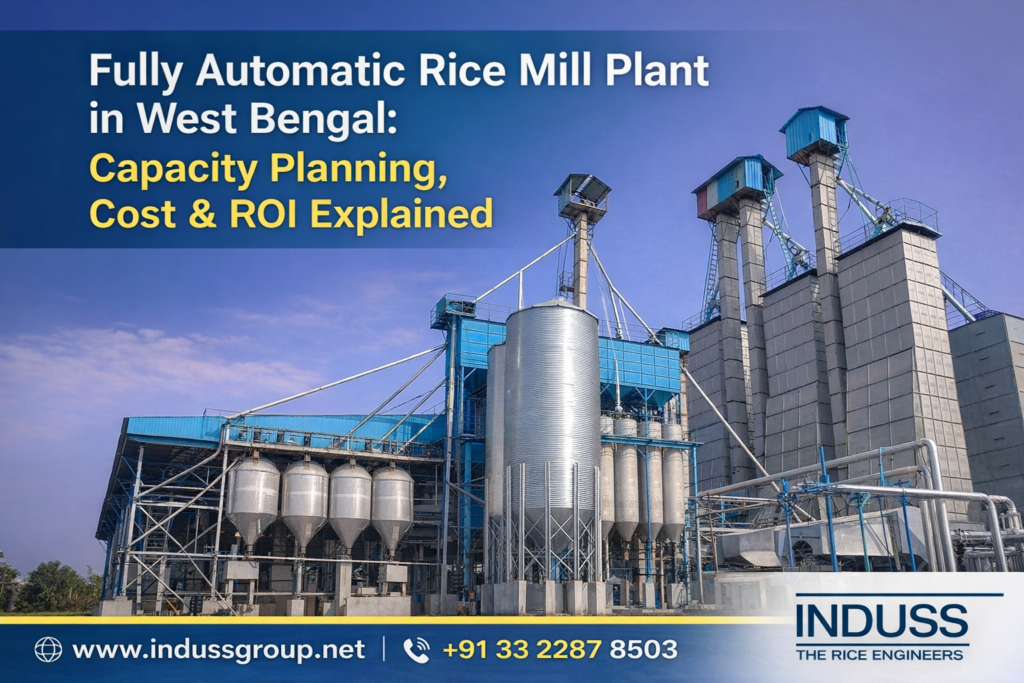
West Bengal has quietly become one of India’s most competitive rice processing belts. From Burdwan and Hooghly to Murshidabad, Midnapore and parts of North 24 Parganas, rice mills today are no longer small family-run units. They are becoming high-capacity, technology-driven processing plants supplying domestic markets and export channels.
If you are planning to set up a fully automatic rice mill plant in West Bengal or upgrade an existing semi-automatic unit, the decision you make in 2026 will shape your profitability for the next 10–15 years.
This guide is written from real project experience across Bengal’s rice belts. It goes beyond brochure promises to explain what actually matters when it comes to capacity planning, plant cost, and realistic return on investment (ROI).
Why Fully Automatic Rice Mills Are Replacing Traditional Plants in West Bengal
The old model of rice milling in West Bengal was built around seasonal procurement, manual handling, open-yard drying, and basic milling lines. That model is breaking down fast.
Mill owners today face:
- Rising labour costs and labour availability issues
- Unpredictable monsoon patterns affecting drying
- Higher quality expectations from buyers and exporters
- Increased competition from large integrated mills
- Pressure on fuel cost, especially husk and electricity
Fully automatic rice mill plants are no longer about prestige. They are about operational survival.
Automation allows mills to:
- Process higher volumes with fewer workers
- Maintain consistent moisture and grain quality
- Reduce breakage and weight loss
- Lower fuel consumption through controlled furnaces
- Run longer operating hours with stable output
In districts like Burdwan and Hooghly, mills that shifted to automated drying and steaming systems are already seeing better price realization per tonne compared to traditional plants.
Capacity Planning: The Most Common Mistake New Investors Make
One of the biggest mistakes new investors make is choosing plant capacity based on aspiration instead of procurement reality.
You’ll often hear:
“I want to set up a 12 TPH or 16 TPH fully automatic rice mill plant.”
The real question is:
👉 Can you consistently procure that much paddy every day, across seasons?
How to Decide the Right Capacity for West Bengal
Capacity planning must consider:
- Average daily paddy procurement in peak season
- Lean season availability
- Local competition for raw paddy
- Storage infrastructure
- Drying and steaming throughput
- Working capital cycle
For many mills in West Bengal, the sweet spot lies between:
- 4–6 TPH for owner-operated regional mills
- 8–10 TPH for commercial suppliers to institutional buyers
- 12+ TPH only when procurement networks and storage are strong
Oversizing your plant creates underutilization. Underutilized capacity leads to:
- Poor ROI
- High fixed cost per tonne
- Idle machinery and maintenance overhead
- Cash flow pressure
Experienced project planners design the plant around daily throughput capability, not brochure capacity.
Core Components of a Fully Automatic Rice Mill Plant
A modern fully automatic rice mill is not a single machine. It is an integrated system where every component affects final yield, quality, and cost.
1. Pre-Cleaning & Intake System
Removes foreign matter before processing. Poor pre-cleaning increases wear on downstream machines.
2. Harvest Dryers / Steam Rice Dryers
Drying consistency determines head rice recovery. Automated dryers eliminate the variability of sun drying and reduce seasonal dependency.
3. Parboiling / Steaming Plant
Uniform steaming improves grain hardness and milling efficiency. Automation ensures consistent pressure and temperature.
4. Husk Fired Furnace
Fuel efficiency depends heavily on furnace design. PLC-controlled furnaces reduce husk wastage and stabilize thermal output.
5. Milling Line (Dehusking, Whitening, Polishing, Sorting)
Automation here improves throughput stability and reduces manual handling losses.
6. Online Moisture Meter & Smart Controllers
Even 1% extra drying can lead to 1% weight loss. Real-time moisture control protects yield and buyer specifications.
7. Water Recycle System (Optional but Strategic)
In water-stressed regions, recycling soaking water significantly reduces operating costs and compliance risks.
When these systems are designed together, not purchased separately, the plant behaves like a single optimized production unit, not a collection of machines.
Cost of Setting Up a Fully Automatic Rice Mill Plant in West Bengal (2026 Reality)
Cost is the most sensitive part of any project. But focusing only on equipment price is a costly mistake.
Typical Cost Components
A fully automatic rice mill plant cost includes:
- Machinery and plant engineering
- Civil construction and foundations
- Electrical infrastructure
- Installation and commissioning
- Utilities (boilers/furnace, power backup)
- Storage Silos or godowns
- Automation and control systems
- Compliance and statutory approvals
Why Two Plants with Same Capacity Have Different Costs
Two 6 TPH plants can differ in cost by 25–40% depending on:
- Level of automation
- Quality of dryers and furnaces
- Control systems used
- Layout efficiency
- Energy efficiency design
- Local civil construction rates
Cheaper plants often compromise on:
- Furnace efficiency
- Dryer control
- Moisture monitoring
- Long-term service support
These compromises don’t show up in the first year. They show up in fuel bills, breakage percentages, downtime, and inconsistent output quality.
ROI: What Real Payback Looks Like in West Bengal
Return on Investment (ROI) in rice milling is influenced by far more than machine capacity.
Key ROI Drivers
- Paddy procurement price vs finished rice selling price
- Breakage percentage
- Drying losses
- Fuel consumption per tonne
- Plant utilization rate
- Downtime and maintenance
- Quality premium from buyers
A properly designed fully automatic rice mill plant typically recovers investment through:
- Lower per-tonne processing cost
- Higher head rice recovery
- Better price realization for uniform quality
- Reduced labour dependency
- Fuel savings through efficient furnaces
Realistic ROI Timeline
In West Bengal conditions, a well-utilized automated plant often sees:
- Operational stabilization in 6–9 months
- Meaningful ROI visibility within 24–36 months
Plants that rush capacity without procurement planning often struggle with cash flow in the first 18 months.
Common Pitfalls in Rice Mill Projects (Seen Repeatedly in WB)
From project reviews across Bengal, some mistakes repeat:
- Choosing capacity without procurement assessment
- Ignoring drying system sizing
- Underestimating fuel cost impact
- Overlooking moisture control
- Buying machines from multiple vendors without integration planning
- Poor layout causing material flow bottlenecks
These issues turn into daily operational pain points once the plant is live.
Location & Infrastructure Considerations in West Bengal
Location impacts logistics, procurement, and operational cost.
Important factors:
- Proximity to paddy growing clusters
- Road access for bulk movement
- Power reliability
- Water availability
- Labour availability
- Regulatory environment
Districts like Burdwan and Hooghly offer strong procurement networks, while Murshidabad and parts of Midnapore benefit from proximity to cultivation zones but may need stronger logistics planning.
Why Engineering-Led Planning Beats Brochure-Based Buying
Modern rice mill projects succeed when planned by process engineers, not sales catalogues.
Engineering-led planning focuses on:
- Process flow efficiency
- Thermal balance
- Moisture management
- Fuel optimization
- Layout ergonomics
- Long-term operating cost
This approach turns automation into a profit tool, not a capital burden.
Conclusion: Automation Is a Business Strategy, Not Just a Machinery Upgrade
A fully automatic rice mill plant in West Bengal is not about looking modern. It is about:
- Competing with larger mills
- Protecting margins
- Maintaining quality consistency
- Building long-term operational resilience
The most successful mill owners don’t ask,
“How big a plant can I build?”
They ask,
“How efficiently can my plant convert paddy into profit, every single day?”
If you approach automation with that mindset, your investment stands a far better chance of delivering sustainable ROI in the evolving rice milling landscape of West Bengal.