


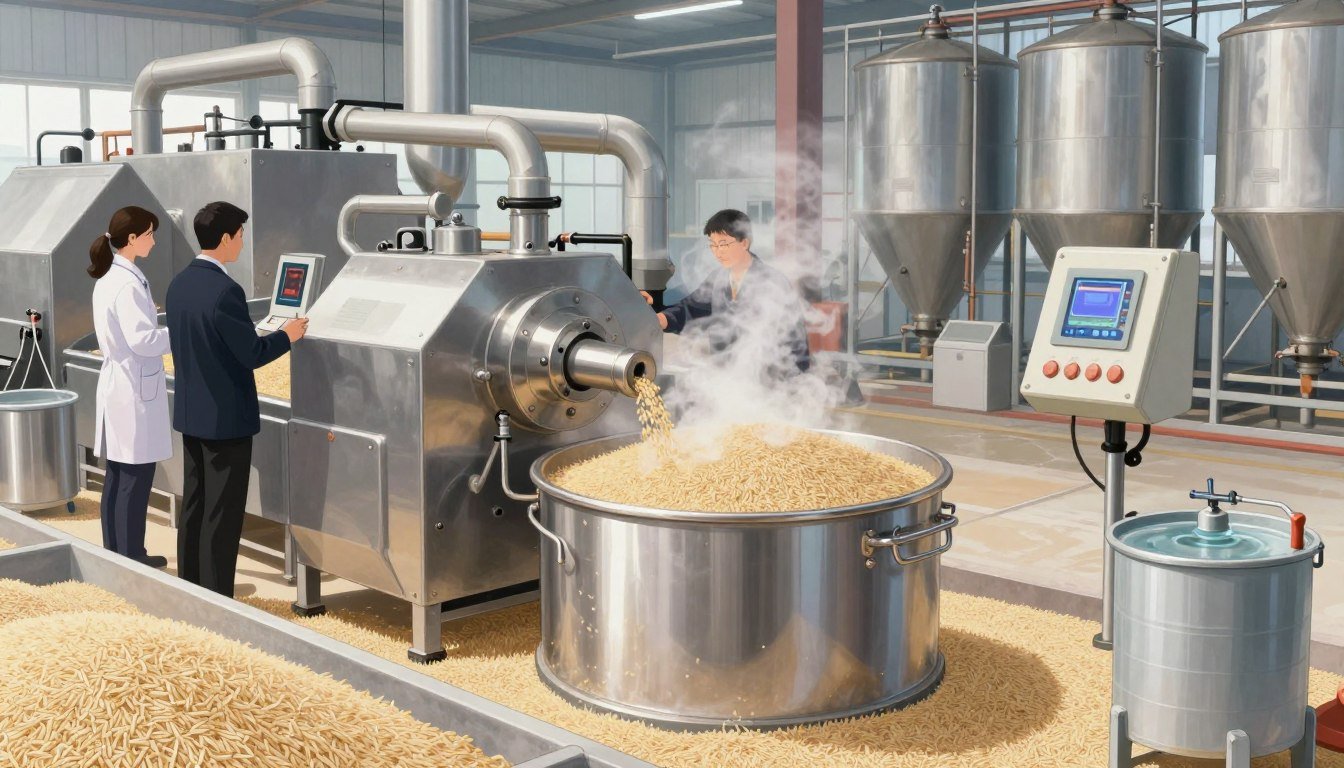
For many of us in India, the aroma of freshly cooked grains is the heart of every home. You likely appreciate the perfect texture on your plate, but have you ever wondered about the journey from the field to your kitchen? Understanding how does a rice parboiling plant work reveals the fascinating engineering behind this daily staple.
This rice parboiling plant guide explores the essential stages that transform raw paddy into premium quality food. We look at the mechanical and chemical shifts that occur during steaming and drying. These steps ensure that every grain retains vital nutrients while achieving the ideal consistency for your favorite meals.
By mastering these industrial techniques, you gain insight into the precision required for modern grain production. Let us walk through the transformation that brings excellence to your table.
Key Takeaways
- Parboiling improves the nutritional profile of the grain.
- The process involves soaking, steaming, and drying stages.
- Industrial facilities use precise heat control for quality.
- Mechanical transformations enhance the durability of the paddy.
- Modern plants ensure consistent output for global consumption.
Understanding the Fundamentals of Rice Parboiling
If you have ever wondered why some rice grains remain firm and nutritious, the answer lies in the ancient art of parboiling. This hydrothermal treatment is a cornerstone of modern milling, and a clear rice parboiling plant explanation helps you see why it remains so vital today. By applying heat and moisture to the paddy before milling, you fundamentally change the grain’s internal structure.
Why Parboiling is Essential for Rice Quality
The primary goal of this process is the gelatinization of starch within the grain. When you subject the paddy to controlled heat, the starch granules swell and fuse, which significantly strengthens the kernel. This structural change is essential for reducing breakage during the milling process, ensuring you get a higher yield of whole, premium grains.
Beyond physical durability, parboiling locks in essential vitamins and minerals. As the grain hydrates, nutrients from the outer bran layer migrate into the endosperm. This means your final product is not only easier to process but also more nutritious for the consumer. A proper rice parboiling plant explanation highlights how this balance of science and engineering creates a superior food staple.
The Historical Evolution of Rice Processing
The journey of rice processing has evolved from simple, labor-intensive methods to the highly automated systems we use today. Historically, communities relied on basic steaming techniques over open fires to preserve their harvest. These traditional methods were effective but lacked the precision required for large-scale, consistent production.
As technology advanced, the industry shifted toward sophisticated engineering solutions that prioritize efficiency and hygiene. Today, a modern rice parboiling plant explanation involves complex systems that manage temperature, pressure, and drying times with incredible accuracy. This evolution ensures that you can meet the growing global demand while maintaining the highest standards of grain quality and safety.
How Does a Rice Parboiling Plant Work? Complete Process Explained
The rice parboiling plant process is a fascinating blend of traditional wisdom and modern engineering. By understanding how these systems function, you can ensure your facility produces consistent, high-quality grain that meets market demands.
Overview of the Industrial Workflow
At its core, a rice parboiling plant is designed to improve the nutritional profile and milling quality of raw paddy. The workflow is highly systematic, ensuring that every grain receives uniform treatment throughout the entire cycle. This rice parboiling plant overview highlights the importance of precision in every phase of production.
When you look at how does a rice parboiling plant work, you will notice that the system relies on a continuous flow of material. Raw paddy enters the facility, undergoes rigorous cleaning, and then moves through specialized chambers. This structured approach minimizes waste and maximizes the final yield of head rice.
The Three Pillars: Soaking, Steaming, and Drying
The success of your operation depends on mastering the three fundamental rice parboiling plant steps. These stages work in harmony to transform raw, fragile paddy into a stable, durable product ready for milling.
- Soaking: This initial phase involves hydrating the paddy in warm water to initiate the gelatinization process.
- Steaming: High-pressure steam is applied to complete the starch transformation, which hardens the grain and locks in nutrients.
- Drying: The final stage removes excess moisture, ensuring the rice reaches a stable level for long-term storage.
Providing a clear rice parboiling plant explanation is vital for operators who want to optimize their output. By carefully controlling the temperature and duration of these three pillars, you can significantly enhance the physical integrity of your rice. This foundational knowledge serves as the starting point for achieving excellence in your processing facility.
The Soaking Stage: Preparing Paddy for Gelatinization
The soaking stage serves as the foundation for achieving perfect grain texture in your facility. This critical phase ensures that every grain absorbs the right amount of moisture before it moves to the next step of the rice parboiling plant process. By controlling this environment, you guarantee that the starch within the paddy is ready for uniform gelatinization.
Hydration Dynamics in the Soaking Tank
Inside the soaking tank, the goal is to achieve a precise moisture content that allows the grain to swell evenly. You must monitor the absorption rate closely to ensure that the inner core of the paddy reaches the ideal hydration level. When the grain is properly saturated, it becomes much easier to achieve consistent results during the subsequent steaming phase.
Uniformity is the hallmark of a high-quality rice parboiling plant process. If some grains absorb more water than others, the final product will suffer from uneven texture and broken kernels. By maintaining steady pressure and flow within your tanks, you protect the integrity of your harvest.
Maintaining Water Temperature and Quality
Managing the water environment is just as important as the duration of the soak. You should keep the water temperature within a specific range to encourage optimal starch transformation while preventing unwanted fermentation. If the temperature fluctuates too much, you risk creating off-flavors that can ruin the taste of your rice.
Furthermore, keeping the water clean is vital for food safety. You must implement regular filtration to prevent microbial growth that could compromise your batch. By prioritizing water quality management, you ensure that your final product remains bright, clean, and appealing to your customers.
Steaming Techniques for Optimal Starch Transformation
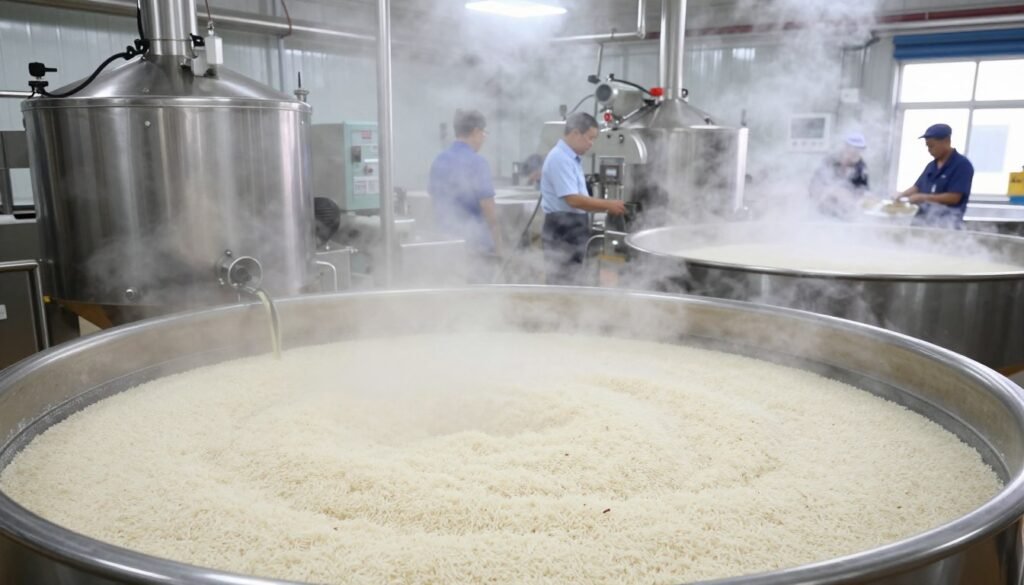
Steaming acts as the transformative heart of your rice processing facility. This phase is where heat and pressure combine to gelatinize the starch within the kernel, ensuring the final product meets high-quality standards. Understanding these rice parboiling plant steps is vital for any operator who wants to maximize their yield.
The Science of Pressure Steaming
Pressure steaming is not just about applying heat; it is about creating a controlled environment that forces moisture into the grain. When you apply steam under pressure, the starch granules inside the rice undergo a physical change known as gelatinization. This process effectively seals the nutrients inside the grain, which significantly improves the milling quality.
By maintaining precise pressure levels, you prevent the grains from cracking during the later stages of processing. This rice parboiling plant mechanics approach ensures that your output remains consistent, batch after batch. Consistency is the hallmark of a successful facility.
Ensuring Uniform Heat Distribution
Achieving uniform heat distribution across large batches of paddy is a common challenge in industrial settings. Engineers use specialized steam distribution manifolds to ensure that every grain receives the same amount of thermal energy. Without this uniformity, you might end up with unevenly cooked rice, which lowers your overall market value.
Modern systems utilize advanced sensors to monitor temperature fluctuations in real-time. These rice parboiling plant steps allow you to adjust steam flow dynamically, preventing over-steaming or under-steaming. By investing in high-quality distribution systems, you protect your investment and ensure a premium final product.
| Rice Variety | Steam Pressure (kg/cm²) | Steaming Time (min) | Resulting Quality |
|---|---|---|---|
| Long Grain | 1.5 – 2.0 | 15 – 20 | Excellent Texture |
| Basmati | 1.2 – 1.5 | 12 – 18 | High Aroma Retention |
| Short Grain | 1.8 – 2.2 | 18 – 25 | High Gelatinization |
Drying Methods and the Role of Smart Dryers
Achieving the perfect moisture balance is the secret to high-quality milling in any professional rice parboiling plant. Once the paddy has been steamed, it holds a high level of moisture that must be reduced carefully. If you dry the grain too quickly, it will crack, leading to significant losses during the milling stage.
Transitioning from Wet Paddy to Stable Moisture Levels
The transition from a wet, gelatinized state to a stable, dry state requires a controlled environment. You need to manage the evaporation rate to ensure the internal structure of the grain remains intact. Uniformity is key during this phase to prevent uneven moisture distribution, which often causes breakage.
Modern facilities rely on multi-stage drying processes to gradually lower the moisture content. By moving the paddy through different temperature zones, you protect the starch structure from thermal shock. This careful approach is what separates a standard facility from a high-performing rice parboiling plant.
Benefits of Using Smart Dryers for Grain Integrity
Smart dryers have revolutionized how we handle post-steaming moisture reduction. These systems utilize advanced sensors to monitor the grain in real-time, adjusting airflow and heat automatically. By maintaining precise conditions, these dryers ensure that your rice retains its nutritional value and physical integrity.
Investing in smart technology offers several distinct advantages for your operations:
- Reduced Breakage: Automated controls prevent the rapid moisture loss that causes grain fissuring.
- Energy Efficiency: Smart sensors optimize fuel consumption by adjusting heat based on the actual moisture content of the paddy.
- Consistent Quality: You achieve a uniform moisture level across every batch, which is essential for premium milling results.
- Higher Throughput: Automated systems allow for continuous processing, keeping your rice parboiling plant running at peak capacity.
By integrating these intelligent systems, you minimize human error and maximize the yield of whole grains. This level of precision is essential for maintaining a competitive edge in the modern market. Ultimately, smart drying is a vital investment for any rice parboiling plant looking to deliver superior quality to consumers.
The Engineering Excellence of INDUSS – The Rice Engineers
Since 1974, INDUSS has been at the forefront of transforming how the world processes grain. When you choose a rice parboiling plant, you are not just buying machinery; you are investing in decades of specialized engineering knowledge.
Legacy and Expertise Since 1974
Headquartered in Kolkata, the company has built a reputation for reliability and innovation. With over 3,500 successful projects completed, they have mastered the art of precision engineering in the rice sector.
Their team understands that every mill has unique requirements. By focusing on automatic and semi-automatic systems, they ensure that your facility operates at peak performance levels consistently.
Global Reach and Project Success Stories
The influence of this engineering powerhouse extends far beyond the borders of India. Their equipment is currently operational in diverse international markets, including Nigeria, Vietnam, Sri Lanka, Nepal, and Bangladesh.
“True engineering excellence is measured by the consistency of the output and the sustainability of the process. INDUSS has set a benchmark for the industry by integrating smart technology with traditional milling needs.”
Impact in India and International Markets
Every year, their robust systems process more than 20 million tons of paddy. This massive scale demonstrates their ability to handle high-volume demands while maintaining superior grain integrity.
The following table highlights the core advantages of choosing their specialized solutions for your facility:
| Feature | Operational Benefit | Efficiency Gain |
|---|---|---|
| Smart Dryers | Uniform Moisture | High |
| Husk-Fired Furnaces | Cost Reduction | Very High |
| Water Recycling | Sustainability | Excellent |
If you are looking to upgrade your rice parboiling plant, you can reach their experts at 238/B, A.J.C. Bose Road, Kolkata. You may also visit their website at www.indussgroup.net to explore how their patented technologies can optimize your production line today.
Key Components of Modern Parboiling Infrastructure
A truly efficient rice parboiling plant overview begins with the systems that handle your raw paddy. While steaming and drying are the heart of the process, the surrounding infrastructure determines your long-term success. Investing in high-quality hardware ensures that your facility maintains peak performance throughout the entire production cycle.
Paddy Cleaning and Pre-Processing Units
Before the grain enters the soaking tanks, it must be free of foreign materials. Paddy cleaning units are essential for removing dust, stones, straw, and metallic impurities that could damage your machinery. By utilizing advanced destoners and magnetic separators, you protect your downstream equipment from unnecessary wear and tear.
Effective pre-processing also involves grading the paddy to ensure uniform size. When grains are consistent in size, they absorb water and heat at the same rate during the parboiling stage. This precision leads to a higher quality final product that meets strict market standards.
Storage and Handling Systems
Proper storage is the backbone of a reliable facility. You need robust systems that prevent moisture buildup and pest infestation while the paddy waits for processing. Modern silos equipped with aeration systems allow you to maintain the ideal temperature and humidity levels for your grain.
Efficient handling systems, such as bucket elevators and screw conveyors, ensure a smooth flow of material between units. These systems are designed to minimize grain breakage, which is vital for maximizing your yield. Consider these key advantages of upgrading your infrastructure:
- Reduced downtime through automated cleaning cycles.
- Enhanced grain integrity by minimizing mechanical stress during transport.
- Consistent output quality due to precise pre-processing standards.
- Improved safety by integrating dust extraction systems within the handling lines.
By focusing on these foundational elements, you create a stable environment for your operations. A comprehensive rice parboiling plant overview confirms that the best facilities are those that prioritize the health of the grain from the moment it arrives at your site.
Advancements in Husk-Fired Furnaces and Energy Efficiency
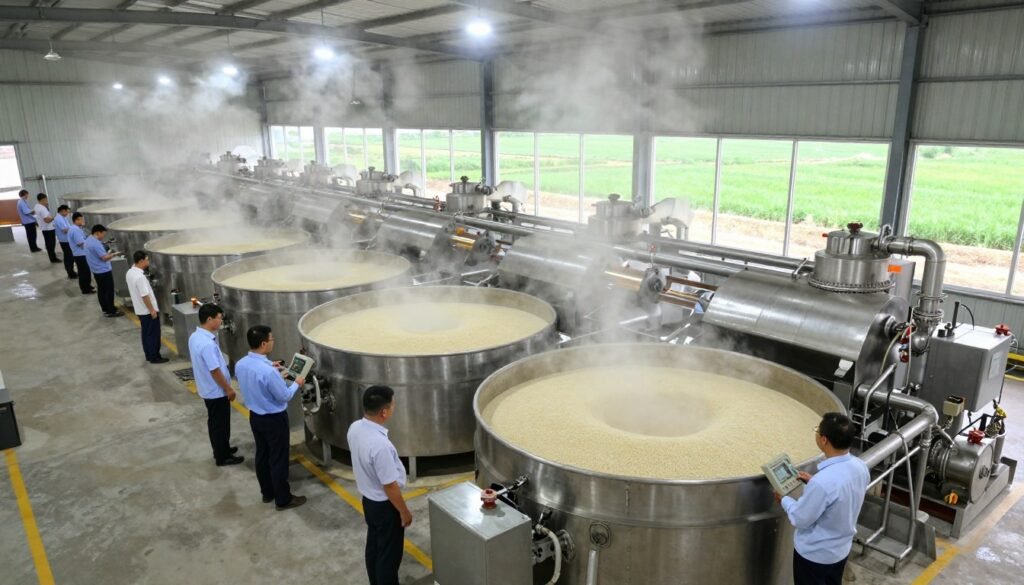
Energy efficiency remains the cornerstone of sustainable and profitable rice parboiling plant operations. As a processor, you understand that minimizing your environmental footprint while controlling overhead is essential for long-term success. By integrating modern technology, you can turn your facility into a model of efficiency.
Reducing Operational Costs with Biomass
INDUSS specializes in advanced husk-fired furnaces that leverage the power of biomass to fuel your production. Instead of relying on expensive external energy sources, you can utilize the rice husk generated during milling as a sustainable fuel. This circular approach significantly lowers your monthly utility bills.
By converting waste into a reliable heat source, you gain better control over your production budget. These furnaces are designed to handle high volumes of biomass, ensuring that your rice parboiling plant operations remain consistent throughout the peak season. You will find that the transition to biomass is one of the most effective ways to improve your bottom line.
Engineering Efficient Heat Exchange Systems
The secret to maximizing thermal output lies in the precision of your heat exchange systems. Modern engineering focuses on capturing every bit of energy produced by the furnace to ensure minimal heat loss. This allows you to achieve the required temperatures for gelatinization with far less fuel consumption.
When you invest in high-efficiency heat exchangers, you are investing in the longevity of your equipment. These systems are built to withstand the rigors of continuous use while maintaining optimal performance. By optimizing these technical components, you ensure that your rice parboiling plant operations are both reliable and environmentally responsible.
| Feature | Traditional Furnace | Modern Husk-Fired System |
|---|---|---|
| Fuel Source | Coal or Oil | Rice Husk (Biomass) |
| Thermal Efficiency | Low (60-65%) | High (85-90%) |
| Operational Cost | High | Very Low |
| Environmental Impact | High Emissions | Carbon Neutral |
Sustainable Water Recycling Systems in Rice Processing
Protecting our precious water resources starts with how we handle the parboiling process. As the agricultural landscape in India evolves, your facility must prioritize efficient water management to remain competitive and responsible. By integrating smart infrastructure, you can transform your mill into a model of environmental stewardship.
Patented Technologies for Water Conservation
INDUSS offers patented water recycling systems designed specifically to minimize waste during the intensive soaking and steaming stages. These systems utilize advanced filtration and closed-loop circulation to ensure that water is cleaned and reused rather than discarded. You will find that this technology significantly lowers your daily freshwater intake requirements.
By implementing these proprietary solutions, your plant can maintain high output levels while drastically reducing its ecological footprint. The engineering behind these systems focuses on long-term reliability and ease of maintenance. This allows your team to focus on production quality without worrying about excessive resource depletion.
Environmental Impact of Modern Recycling
Adopting modern recycling methods provides a clear path toward sustainable rice production. When you reduce the volume of wastewater discharged from your plant, you help protect local groundwater quality and surrounding ecosystems. This proactive approach not only benefits the environment but also enhances your brand’s reputation as a leader in responsible manufacturing.
The following table illustrates the efficiency gains achieved by transitioning from traditional methods to modern, closed-loop recycling systems:
| Feature | Traditional System | Modern Recycling System |
|---|---|---|
| Water Consumption | High (Single-use) | Low (Recirculated) |
| Waste Discharge | Significant | Minimal |
| Operational Cost | Rising | Optimized |
| Sustainability | Low | High |
Investing in these technologies is a strategic decision that pays dividends for both your bottom line and the planet. By choosing to recycle, you ensure that your rice parboiling plant remains viable for future generations. Embracing these innovations is the most effective way to align your operations with modern environmental standards.
Operational Benefits of Automatic and Semi-Automatic Plants
Upgrading your facility to an automatic or semi-automatic system is a game-changer for modern rice processing. By moving away from traditional manual methods, you can significantly improve your rice parboiling plant operations. These systems are specifically engineered to help you scale production while maintaining high standards of quality.
Increasing Throughput and Reducing Labor
INDUSS specializes in providing advanced solutions that streamline your entire workflow. When you integrate automatic systems, you effectively minimize human error and reduce the physical strain on your workforce. This shift allows your team to focus on management rather than repetitive manual tasks.
Higher throughput is a natural result of these technological upgrades. You will find that your plant can process larger volumes of paddy in less time, which directly impacts your bottom line. Consistency is the key to building a strong reputation in the competitive Indian rice market.
Precision Control in Modern Rice Engineering
Modern rice parboiling plant mechanics offer you the ability to monitor and adjust variables in real-time. With digital interfaces, you can control temperature, moisture levels, and steaming duration with incredible accuracy. This level of precision ensures that every batch of rice meets your exact specifications.
Staying competitive requires you to embrace these engineering advancements. By having granular control over your processes, you can adapt quickly to changing market demands. Efficiency is no longer optional; it is a requirement for long-term success in the industry.
| Feature | Manual System | Automatic System |
|---|---|---|
| Labor Requirement | High | Low |
| Process Consistency | Variable | High |
| Operational Speed | Slow | Fast |
| Control Precision | Limited | Advanced |
Conclusion
Investing in high-quality infrastructure transforms your milling business into a powerhouse of efficiency. This rice parboiling plant guide serves as your roadmap for navigating the technical demands of modern grain production.
You now possess the insights needed to evaluate equipment, energy systems, and water management strategies. Applying these principles helps you maintain consistent grain quality while lowering your environmental footprint.
The path to success relies on choosing reliable partners like INDUSS – The Rice Engineers. Their legacy of innovation supports your goal of achieving superior throughput in a competitive market.
Keep refining your facility to stay ahead of industry trends. Your commitment to precision engineering ensures that your output meets the highest global standards. Use this rice parboiling plant guide to make informed decisions that drive long-term growth for your enterprise.
Reach out to industry experts to discuss your specific project requirements today. Your journey toward a more profitable and sustainable milling operation starts with these foundational steps.