


Setting Up a New Rice Mill in West Bengal: Licenses, Machinery Checklist & Project Budget (2026 Guide)
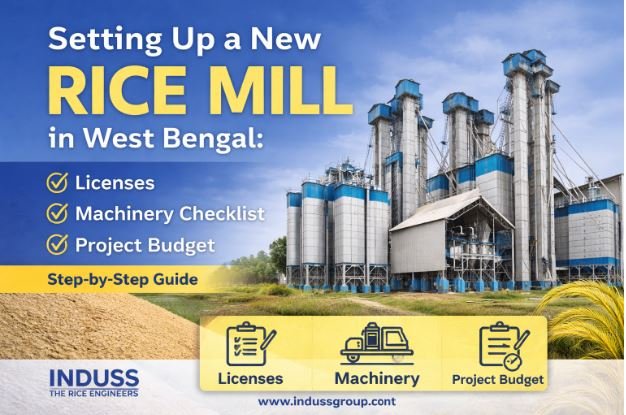
West Bengal has long been one of India’s most important rice-producing states. With strong agricultural output, a well-established paddy procurement ecosystem, and growing domestic and export demand, the state continues to offer strong opportunities for entrepreneurs planning to establish a modern rice mill.
However, setting up a rice mill today involves much more than purchasing milling equipment. Investors must navigate regulatory approvals, design efficient plant layouts, select the right machinery, and prepare realistic project budgets.
A carefully planned rice mill setup in West Bengal ensures smooth project execution, stable production cycles, and long-term profitability. On the other hand, poor planning often leads to licensing delays, installation issues, and unexpected cost overruns.
This guide explains the key licenses required, machinery checklist, and budget considerations for setting up a new rice mill in West Bengal.
Why West Bengal Is Ideal for Rice Mill Investments
West Bengal consistently ranks among the largest rice-producing states in India. Several districts produce large volumes of paddy and already have strong trading networks.
Major rice milling clusters include:
Purba Bardhaman (Burdwan)
Known as the “Rice Bowl of Bengal,” this region has strong procurement networks and numerous rice processing facilities.
Hooghly
An established industrial region with strong logistics connectivity to Kolkata.
Murshidabad
Rapidly growing as a hub for parboiled rice production.
Nadia
Strategically located near international trade routes and domestic distribution networks.
Medinipur Region
An emerging zone where modern automated rice mills are being established.
These districts provide reliable paddy supply, making them ideal locations for new rice milling ventures.
Licenses Required to Start a Rice Mill in West Bengal
Setting up a rice mill requires several regulatory approvals from state and central authorities. The exact requirements may vary depending on plant capacity and project type.
Below are the key licenses typically required.
Business Registration
The first step is registering the business entity.
Investors can register as:
• Private Limited Company
• Partnership Firm
• Limited Liability Partnership (LLP)
• Proprietorship
Proper business registration ensures legal compliance and enables access to financing and government incentives.
Trade License
A trade license issued by the local municipal authority is required to operate an industrial unit within the jurisdiction.
Factory License
Rice mills fall under industrial manufacturing activities and require approval under the Factories Act.
This license ensures compliance with safety standards, worker welfare regulations, and workplace infrastructure guidelines.
Pollution Control Board Approval
Rice mills require environmental clearance from the West Bengal Pollution Control Board.
Approvals usually include:
• Consent to Establish (CTE)
• Consent to Operate (CTO)
These approvals ensure proper handling of emissions, waste, and water usage.
FSSAI Registration
Since rice is a food product, the mill must obtain Food Safety and Standards Authority of India (FSSAI) registration.
This certification ensures compliance with food safety regulations.
Electricity Connection Approval
Rice mills require high-capacity electrical supply for machinery, conveyors, dryers, and automation systems.
Approval from the state electricity distribution company is required before plant operations begin.
Machinery Checklist for a Modern Rice Mill
Selecting the right machinery is one of the most critical decisions in a rice mill project. Modern mills require integrated equipment systems to ensure efficient processing.
Below is a typical machinery checklist for a modern rice processing plant.
Paddy Cleaning System
Before processing begins, raw paddy must be cleaned to remove:
• Stones
• Dust
• Husk
• Foreign particles
Cleaning machines protect downstream equipment and ensure better processing efficiency.
Milling Equipment
The milling section performs the core rice processing operations, including:
• Dehusking
• Whitening
• Polishing
• Grading
• Sorting
Automation improves head rice recovery and product quality.
Cookers in Rice Mill
For parboiled rice production, cookers in rice mills ensure uniform steaming conditions that strengthen rice kernels before milling.
Automatic Steam Plant
Steaming requires a reliable steam supply.
An Automatic Steam Plant maintains consistent steam pressure, ensuring proper gelatinization of paddy during the parboiling process.
Husk Fired Furnace
Rice mills often use husk as fuel to generate thermal energy.
A well-designed Husk Fired Furnace powers dryers and steam plants while reducing fuel costs.
Efficient furnace systems significantly improve overall plant energy efficiency.
Harvest Driers
Drying is one of the most critical stages in rice processing.
Harvest Driers remove excess moisture from paddy and ensure proper grain conditioning before milling.
Proper drying prevents cracking and improves head rice recovery.
Steam Rice Drier
In parboiled rice plants, Steam Rice Driers stabilize moisture levels after steaming to ensure consistent grain quality.
Online Moisture Meter
Moisture levels directly affect milling performance.
An Online Moisture Meter continuously monitors grain moisture and allows operators to adjust drying parameters accordingly.
This prevents over-drying and improves overall product quality.
De-Humidifier
West Bengal’s humid climate can affect drying performance.
A De-Humidifier helps control moisture levels in drying chambers, ensuring stable processing conditions.
Water Recycle System
Parboiling plants use large volumes of water during soaking.
A Water Recycle System allows mills to reuse water multiple times, reducing operational costs and improving sustainability.
Maize Drier for Off-Season Processing
Some rice mills install a Maize Drier to process maize during off-season periods.
This helps maximize plant utilization and generate additional revenue streams.
Project Budget for a Rice Mill Setup
The cost of establishing a rice mill depends on several factors, including plant capacity, automation level, land cost, and infrastructure requirements.
Key budget components include:
Land Acquisition
Land prices vary across districts.
Factors influencing land cost include:
• Location
• Road connectivity
• Industrial zoning
• Proximity to paddy markets
Civil Construction
Civil infrastructure includes:
• Processing buildings
• Dryer towers
• Storage warehouses
• Soaking tanks
• Furnace platforms
Civil construction typically accounts for a significant portion of the project budget.
Machinery & Equipment
Machinery costs vary depending on plant capacity and technology level.
Investing in high-quality equipment improves long-term operational efficiency.
Electrical & Automation Systems
Automation systems such as PLC control panels, sensors, and monitoring systems ensure stable plant operations and reduce manual intervention.
Installation & Commissioning
Professional installation ensures proper machine alignment and system integration.
Poor installation can lead to performance issues later.
Importance of Choosing the Right Rice Mill Plant Manufacturer
Selecting an experienced Rice Mill Plant Manufacturer plays a critical role in project success.
An experienced engineering partner helps with:
• Plant layout design
• Machinery integration
• Thermal system optimization
• Automation implementation
• Installation supervision
This ensures all systems—from steaming to drying—operate smoothly together.
How Induss Food Products & Equipments Ltd Supports New Rice Mill Projects
Induss Food Products & Equipments Ltd has decades of experience in designing and installing advanced rice processing plants.
The company provides integrated engineering solutions including:
• Automatic Steam Plant
• Cookers in Rice Mill
• Husk Fired Furnace
• Harvest Driers
• Steam Rice Drier
• Online Moisture Meter
• Water Recycle System
• De-Humidifier systems
• Maize Drier
By integrating these technologies into a single system, Induss helps rice mill owners achieve higher production efficiency, improved grain quality, and reduced operational costs.
Conclusion
Setting up a rice mill in West Bengal offers strong business opportunities due to the state’s robust agricultural ecosystem and growing rice demand.
However, successful projects require careful planning across licensing, machinery selection, and project budgeting.
By understanding the regulatory requirements, choosing the right technology, and working with experienced engineering partners, investors can build efficient and profitable rice milling operations.
Modern rice mills that integrate technologies such as Harvest Driers, Husk Fired Furnace, Steam Rice Drier, Online Moisture Meter, Water Recycle System, De-Humidifier, Cookers in Rice Mill, Automatic Steam Plant, and Maize Drier are better equipped to meet the demands of today’s competitive rice processing industry.
Frequently Asked Questions (FAQ)
Q1. What licenses are required to start a rice mill in West Bengal?
Key licenses include business registration, trade license, factory license, pollution control approval, and FSSAI registration.
Q2. How much land is required to set up a rice mill?
Small mills may require around 1 acre, while larger integrated plants may need 3–4 acres or more.
Q3. What is the most important equipment in a rice mill?
Critical equipment includes dryers, furnaces, steam plants, milling machines, and moisture monitoring systems.
Q4. Why is moisture control important in rice milling?
Incorrect moisture levels can lead to grain breakage and reduced head rice recovery.
Q5. Can rice mills process other grains besides paddy?
Yes. Installing a maize drier allows mills to process maize during off-season periods.